April 27, 2026

Growing a Piano School Without Losing Your Personal Touches

For many music teachers, the idea of growing a school brings a quiet concern: will this start to feel less personal? When you’re used to knowing every student, remembering their challenges, and celebrating their small wins, growth can feel like a compromise. There’s often an assumption that more students automatically means less attention, less connection, and a more “standardised” experience. But in reality, it’s not growth that removes the personal touch - it’s a lack of structure to support that growth.


Personalisation isn’t about trying to hold everything in your head or relying on memory alone. It’s about creating consistent ways to understand and support each student’s journey over time. Regular communication, structured feedback, and access to the right resources ensure that students and parents feel seen not just occasionally, but as part of an ongoing process. When these elements are built into how you operate, personalisation becomes something that is delivered reliably, rather than something that depends on how much time or energy you have in a given week.


For many solo teachers, personalisation works well at the beginning because it’s manageable. But as the timetable fills, things often become more reactive. Messages are sent when there’s time, feedback becomes less consistent, and it becomes harder to track each student’s development in a structured way. The intention to provide a personal experience is still there, but without systems, it becomes increasingly difficult to maintain that standard across a growing number of students.


When done well, growth can actually strengthen the personal touch rather than dilute it. It allows you to move from trying to remember everything to having a system that ensures every student is supported consistently. The experience becomes more structured, more visible, and ultimately more meaningful for both the student and the parent not because you’re doing more, but because what you do is supported in the right way.


If you’ve been thinking about teaching music but don’t want to go it alone, we’d love to support you. Our franchise gives you everything you need to start strong and grow with confidence. Let’s chat about what’s possible: https://www.keysoundsmusic.com/contact 

April 20, 2026
Many music teachers build something that works - until it doesn’t. A full timetable, a steady flow of students, and a busy schedule can look like success from the outside. But behind the scenes, it often comes with constant adjustments: chasing cancellations, navigating last-minute changes, and managing income that doesn’t always feel predictable. Over time, this creates a sense of pressure that isn’t always visible, but is very much felt. These patterns can quietly become normalised. Working late evenings, filling weekends, hesitating to increase prices, and adapting to every request can start to feel like part of the role. But this isn’t sustainability, it's a model that relies heavily on the teacher constantly holding everything together. It works in the short term, but it doesn’t create the stability or clarity needed for long-term growth. Sustainable teaching looks different. It’s built on clear expectations, professional (yet kind) boundaries, and systems that reduce the constant mental load. Instead of reacting to each situation as it arises, there are clear processes in place that support both the teacher and the student. Rescheduling becomes structured rather than stressful, communication becomes consistent rather than reactive, and income becomes more predictable because the model itself is more stable. The biggest shift is not just in how things operate, but in how it feels to teach. When your teaching is sustainable, there is more mental clarity, more confidence in your decisions, and a stronger sense of progress over time. Instead of feeling busy but stuck, you begin to feel in control with a structure that supports your work, your wellbeing, and your ability to continue growing without burning out.  If you’ve been thinking about teaching music but don’t want to go it alone, we’d love to support you. Let’s chat about what’s possible: https://www.keysoundsmusic.com/contact
April 14, 2026
Growing from a solo teacher into a structured school isn’t simply about having more students - it’s about operating in a fundamentally different way. In the early stages, everything often relies on the individual: your time, your memory, your availability, and your ability to manage each situation as it comes. While this can feel flexible, it can also become limiting as demand increases. One of the biggest shifts happens in communication. Instead of being reactive, replying to messages, sending occasional updates, and addressing challenges as they arise, communication becomes proactive and consistent. Students and parents receive clear information, regular reminders, and ongoing feedback as part of a structured process. Importantly, this doesn’t remove the personal element; it allows it to be delivered more reliably, without depending on starting from scratch each time. As structure develops, the role of the teacher also begins to evolve. It moves from doing everything individually to leading a system that supports everything collectively. Decisions become easier because expectations are defined and processes are already in place. Rather than constantly trying to find more time, you begin to create capacity through how things are organised and delivered. Of course, this shift brings its own challenges. Leading others, maintaining standards, and thinking beyond your own teaching requires a different level of responsibility. But many aspects become significantly easier - organisation becomes clearer, communication becomes more efficient, and long-term planning becomes possible. The most important shift is this: you move from being the system to being supported by one, and that changes what growth actually feels like.  If you’ve been thinking about teaching music but aren’t sure which next step to take let’s chat about what’s possible: https://www.keysoundsmusic.com/contact
March 29, 2026
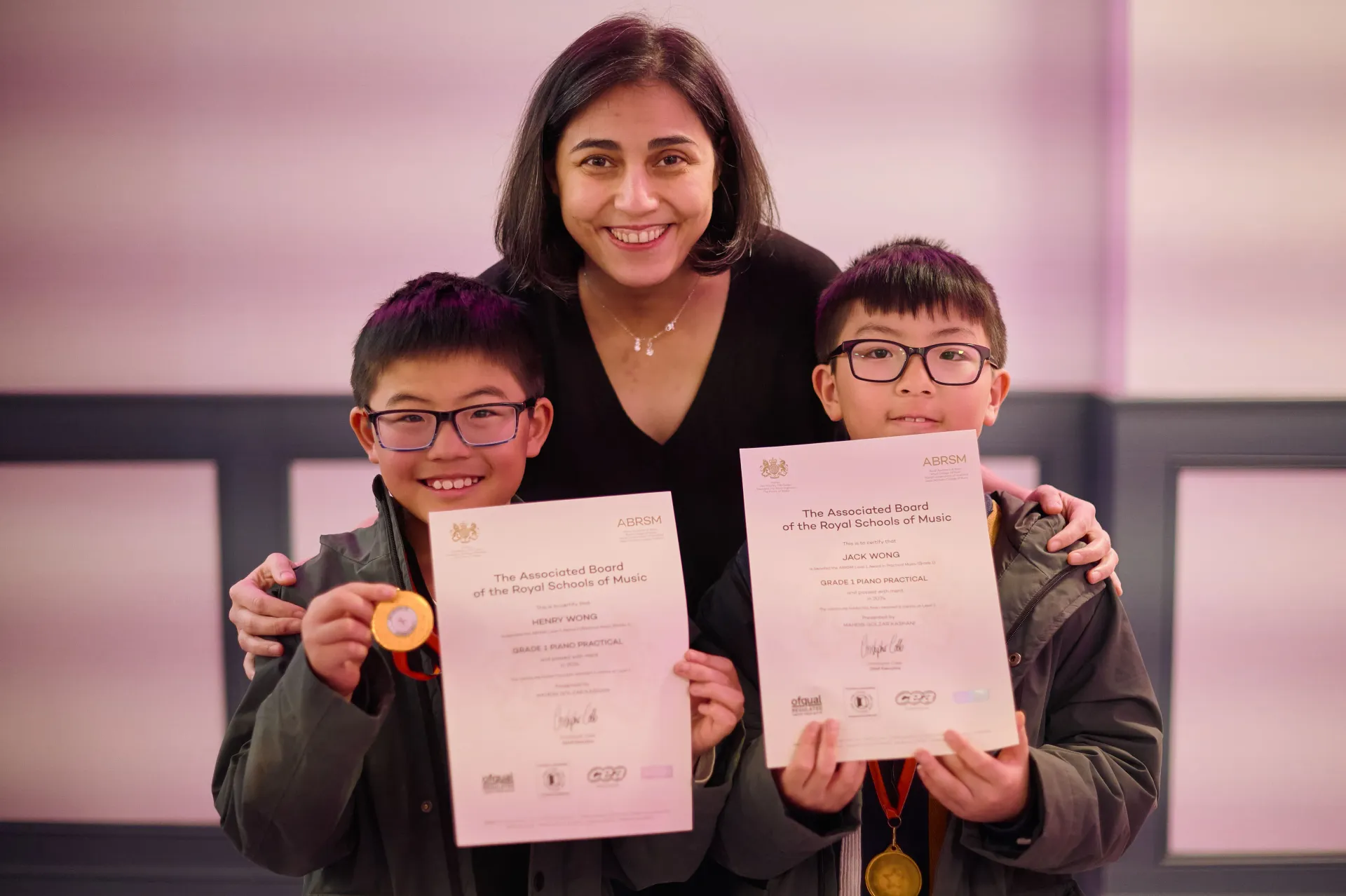
Ask any piano teacher what their biggest challenge is, and most will say the same thing: keeping students engaged long enough to see real progress. Children drop out. Parents lose faith. The enthusiasm of the first lesson fades by Easter. It doesn't have to be this way and we can prove it. Why most piano teaching doesn't stick Traditional piano tuition has a retention problem. A child starts lessons full of excitement, hits the first real challenge around grade 1, and quietly disappears from the register. It's not the teacher's fault, and it's not the child's fault. It's usually a structural problem: lessons that feel disconnected, progress that isn't celebrated, and a child who doesn't yet feel like they belong in music. The solution isn't a better method book. It's a philosophy. The 3 C's: Communication, Confidence and Community At Key Sounds Music, everything we do is built around three principles that we believe are the foundation of genuinely effective music education. Communication means keeping parents informed, involved and enthusiastic not just at the end-of-year show, but throughout the journey. When parents understand what their child is learning and why, they become advocates for the lessons rather than obstacles to the practice. Confidence means designing every lesson so that a child leaves feeling more capable than when they arrived. Progress doesn't have to be dramatic to be meaningful. A child who masters one new thing each week, and knows it, becomes a child who wants to come back. Community means creating an environment where students feel they're part of something, not just having a private lesson in someone's front room, but belonging to a group of young musicians who share their journey. Recitals, group events, shared milestones. It changes everything. What 160+ students tells you These aren't theories. Key Sounds UK in Harrow and Hillingdon was built entirely on this philosophy and it now serves over 160 students with strong, consistent monthly growth. No shortcuts, no gimmicks. Just Communication, Confidence and Community, applied with care week after week. That proof of concept is exactly what we're now making available to piano teachers who want to build something equally meaningful in their own area. You don't have to spend years figuring out what works. We already have What this means if you're a piano teacher If you've been teaching for a while and you know something is missing whether that's structure, support, or simply the feeling that your students are really thriving, the 3 C's framework might be exactly what you've been looking for. Key Sounds Music is currently looking for its first licensed partners outside of Harrow and Hillingdon. We're not rushing. We're looking for the right teachers, people who care deeply about their students and want to be part of something built to last.  Feel free to get in touch to find out more about our opportunities!
More Posts